




Imagine a warehouse the size of ten football pitches. Inside, thousands of robotic drive units glide effortlessly across the floor, carrying shelves weighing up to 450 kilograms. They don't crash, they don't get lost, and they bring products directly to human workers with perfect precision.
This isn't sci-fi; it’s a modern Amazon Fulfilment Centre right here in the UK. It is the ultimate real-world story of the "Smart Factory", an interconnected ecosystem driven by automation, robotics, and real-time data.
But how do these massive industrial robots navigate such a bustling maze? They look down. Using downward-facing cameras and optical sensors, they read a matrix of encoded tracking markers fixed to the floor, instantly calculating their path.
Scaling Down Giant Technology
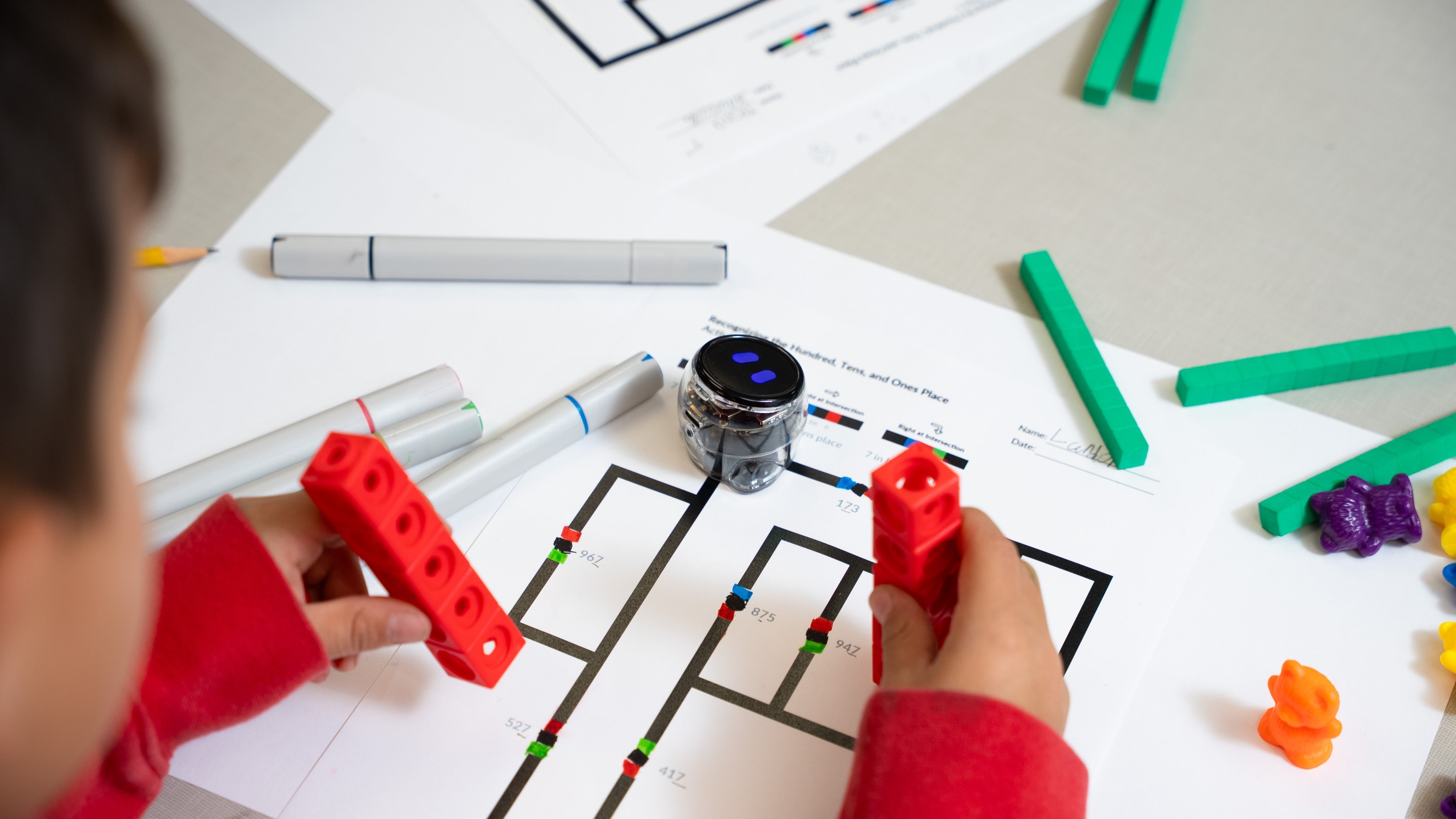
Picture a classroom. A student draws a black line on a piece of paper, adds a blue-black-blue colour sequence, and watches a pocket-sized robot instantly speed up.
That student is playing with an Ozobot, but they are also doing something much bigger: they are writing the exact same logical programming used by Amazon's multi-million-pound fleet.
To prepare the next generation for a tech-driven workforce, we need to make Industry 4.0 tangible. By coding small-scale robots to follow tracks, read sensor data, and solve navigation challenges, students aren't just learning to code, they are discovering how the modern world actually moves.
Bring the Smart Factory to Your Classroom
You don't need a massive industrial budget to inspire future engineers. The Ozobot collection at Creative Hut brings the magic of smart automation straight to your pupils' desks. With a blend of screen-free colour codes and advanced block programming, it’s the perfect way to turn abstract industry concepts into hands-on breakthroughs.
Explore the range today and let your students write the next chapter in automation.
👉 Shop the Ozobot Collection at Creative Hut

Ozobot Aligns with Curriculum
Ozobots align directly with the UK National Curriculum by taking pupils on a structured coding journey. At Key Stage 1, they introduce the basics of algorithmic thinking through screen-free, colour-coded lines, before progressing to advanced block-based programming, debugging, and conditional logic at Key Stages 2 and 3. Beyond the Computing curriculum, these pocket-sized robots seamlessly integrate into wider STEAM subjects—whether that is calculating angles in Maths, navigating grid references in Geography, or simulating automated factory systems in Design & Technology.
Educators can find over 700 ready-to-go, standards-aligned lesson plans, pacing guides, and student-facing video tutorials directly via the free Ozobot Classroom Lesson Portal.




Share:
Building Confidence in the Classroom: Empowering Teachers with LEGO Education
Inspiring Future Engineers: Why Early Exposure Matters